Realize the Merits of Hiring a Commercial General Contractor for Streamlined Construction Management
Hiring a commercial general contractor can significantly alter the construction management process. The contractor's knowledge makes certain that projects are meticulously planned and executed with precision. By enhancing communication among all stakeholders, they encourage a collaborative environment. Additionally, their experience in effective budget management and mitigating potential risks is critical. Nonetheless, the full measure of their impact often goes beyond these basics, showing profound benefits that can change how project success is measured.
Expertise in Project Management

If a commercial general contractor has expertise in project management, they can efficiently supervise the entire construction process, guaranteeing that timelines and budgets are met. Their proficiency allows them to coordinate different facets of the project, from planning and scheduling to resource allocation. With a sharp grasp of construction methodologies and industry regulations, they can anticipate potential challenges and implement solutions proactively.
This expertise also enables them to manage subcontractors and suppliers efficiently, guaranteeing everyone understands their tasks and roles. By utilizing project management tools and techniques, they ensure transparency of progress, making prompt modifications possible when necessary. Their ability to analyze data and metrics ensures that projects are not delayed, reducing setbacks and cost overruns. In the end, a contractor's project management skills contribute greatly to the overall success of construction endeavors, delivering excellent finishes and happy customers.
Better Communication Among Stakeholders
Effective communication among stakeholders is crucial for the success of any commercial construction project, as it encourages cooperation and agreement on objectives. A commercial general contractor functions as the pivotal point of contact between different groups, including architects, engineers, and clients. This centralization of communication simplifies how information moves, guaranteeing that all stakeholders are aware of project progress, timelines, and possible issues.
By holding consistent meetings and utilizing project management tools, the contractor improves clarity and prevents miscommunications. Stakeholders are prone to voice concerns and offer suggestions when they feel their perspectives are valued. Additionally, effective communication can lead to faster problem solving, minimizing delays and interruptions.
Finally, hiring a commercial general contractor not only improves communication but also fosters stronger relationships among stakeholders, establishing a unified environment that is supportive of successful results.
Managing the Budget Effectively
Successful budget management is vital for ensuring that building endeavors stay within financial constraints and meet their objectives. A general contractor is instrumental in overseeing and controlling project costs - Hickory top rated Commercial General Contractor. By providing detailed cost estimates and continuous financial tracking, they are crucial in avoiding cost overruns. Skilled contractors leverage their industry knowledge to identify potential cost-saving opportunities, like negotiating supplier prices or improving resource distribution
Furthermore, they implement thorough financial reporting systems, enabling stakeholders to track expenses carefully and make informed decisions. This forward-thinking approach to budget management boosts accountability but also promotes openness among everyone involved. Moreover, through meticulous planning and forward thinking, general contractors are able to predict financial difficulties and develop emergency plans, ensuring that projects maintain their financial course. In the end, sound financial control by a commercial general contractor is essential for the final success of building efforts
Better Time Management and Fewer Setbacks
While unexpected issues might happen during construction projects, hiring a commercial general contractor boosts efficiency and minimizes delays. Contractors possess extensive experience and a thorough knowledge of construction processes, helping them predict issues before they worsen. The relationships they have built with subcontractors and suppliers ensure quick procurement of materials and services, shortening delays.
Moreover, commercial general contractors are skilled schedulers, ensuring that all project phases progresses smoothly and punctually. They use project management software to monitor timelines and organize tasks, which improves work processes. By resolving problems fast and promptly, they mitigate downtime and ensure the project stays on schedule. Furthermore, their skill in navigating regulations avoids regulatory holdups. Finally, the careful supervision offered by a GC creates a more effective building process, ensuring projects are delivered within the desired timeframe.
Quality Management and Oversight
Quality control and assurance are critical components in the choosing of a commercial building contractor. Implementing rigorous standards and procedures, coupled with consistent inspection processes, makes certain that projects fulfill the required specifications. Furthermore, efficient oversight of a skilled workforce greatly helps to ensuring excellent quality during the building phase.
Strict Protocols and Protocols
When hiring a commercial building contractor, understanding their rigorous standards and protocols for quality assurance and oversight is crucial. These protocols are intended to maintain high construction quality and ensure adherence with industry regulations. Building firms utilize detailed protocols that specify required materials, workmanship, and safety protocols, ensuring that every aspect of the project meets predefined benchmarks. This focus on superiority not only minimizes errors but also lessens the chance of costly rework. Additionally, building firms usually create clear communication channels with all interested parties, fostering collaboration and transparency across the entire project duration. By sticking to these strict procedures, building firms instill confidence, sure that the build will be executed efficiently and to the most rigorous quality benchmarks.
Consistent Inspection Processes
To make certain that construction projects meet the highest standards, general commercial contractors establish regular review procedures as a vital element of their quality assurance and review procedures. These systems require regular assessments at various stages of construction, verifying that materials, workmanship, and overall compliance with project specifications are meticulously evaluated. By sticking to set examination calendars, contractors can identify potential issues early, reducing expensive modifications view details and delays. Moreover, regular reviews promote responsibility among suppliers and specialized workers, as they are held to stringent quality benchmarks. This organized method not only boosts the complete reliability of the project but also instills confidence in stakeholders, knowing that their investment is underpinned by a focus on superiority throughout the construction process.
Expert Staff Oversight
A skilled workforce is essential for maintaining excellent criteria in construction projects, as it directly impacts quality assurance and review procedures. Efficient oversight of this workforce ensures that each team member is well-trained and has the required skills to perform their tasks efficiently. A general contractor specializing in commercial projects usually implements rigorous hiring processes for selecting competent staff, cultivating an environment of accountability and excellence. Furthermore, regular professional development allow employees to keep pace on the latest building methods and safety protocols. By implementing detailed performance monitoring, the contractor can track progress and deal with deficiencies immediately, guaranteeing that the final output outperforms client expectations. In conclusion, effective personnel oversight is a cornerstone of successful construction projects.
Availability of a Pool of Reliable Subcontractors
Maintaining a roster of reliable subcontractors is crucial for a commercial general contractor. Established industry connections allow the GC to pick competent specialists who adhere to stringent quality requirements essential for project success. This network improves overall productivity but also ensures the construction adheres to elevated performance criteria.
Established Industry Connections
While maneuvering through the complexities of a construction project, maintaining strong professional networks greatly enhances a contractor's ability to achieve high-quality outcomes. A commercial general contractor often maintains a strong roster of reliable subcontractors, suppliers, and industry professionals. This network not only facilitates seamless collaboration but also makes certain the highest skill level is available for all parts of the undertaking. Access to seasoned subcontractors enables the GC to pick experts who are masters of their craft, which can lead to better operational speed and superior workmanship. Furthermore, these connections enable the contractor to secure advantageous agreements and timelines, ultimately streamlining the construction process. In short, established industry connections are a crucial resource that enhances project performance and client satisfaction.
Quality Assurance Standards
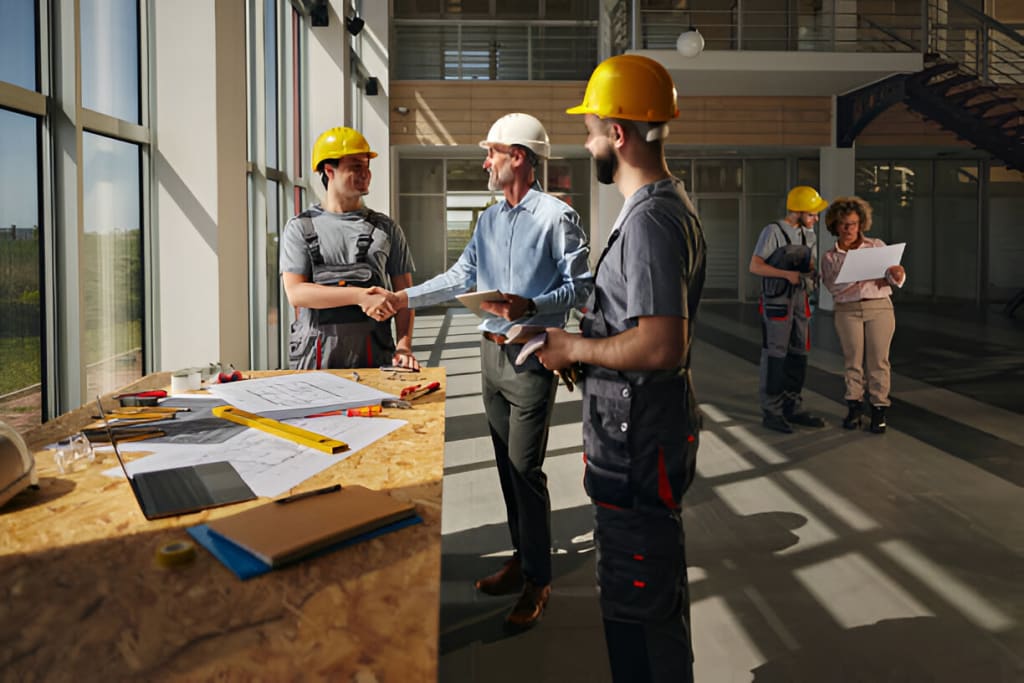
Quality assurance standards are critically important in the construction process, as they guarantee that projects meet specified requirements and maintain high levels of workmanship. A commercial general contractor brings a wealth of experience and oversight, ensuring that all work adheres to these high benchmarks. By leveraging a network of reliable subcontractors, they can pick competent specialists who excel in their respective trades, further enhancing the overall quality of the project. This collaborative approach encourages ownership among subcontractors, as they are informed of the requirements set forth by the general contractor. Furthermore, regular inspections and assessments allow us to find problems at an early stage, minimizing costly delays and making sure the outcome meets the standards of the defined scope and safety protocols.
Risk Mitigation and Problem Solving
Effective risk mitigation and problem solving form vital parts for a commercial building contractor, as they manage the intricate details of construction projects. By conducting thorough risk assessments, these experts determine potential issues that may arise while the project is underway, including hold-ups, exceeding the budget, and dangerous conditions.
Using forward-thinking methods, they formulate emergency measures that limit setbacks and secure uninterrupted progress. If unexpected problems arise, a skilled contractor responds swiftly, applying novel approaches to address problems without sacrificing the project's duration or excellence.
Moreover, their background permits them to foresee common pitfalls, enabling them to communicate effectively with all parties involved to set clear expectations and settle disputes. In the end, a CGT's skill to control exposure and troubleshoot not only enhances operational efficiency but also safeguards the project's overall success, creating a more stable and managed building process.
FAQ
Which Skills Are Important in a Commercial General Contractor?
When selecting a commercial general contractor, one should consider experience, relevant licensing and certifications, proven project management skills, excellent communication skills, a solid reputation, and expertise in industry standards and safety measures.
What Is the Process for Selecting the Ideal Contractor for My Needs?
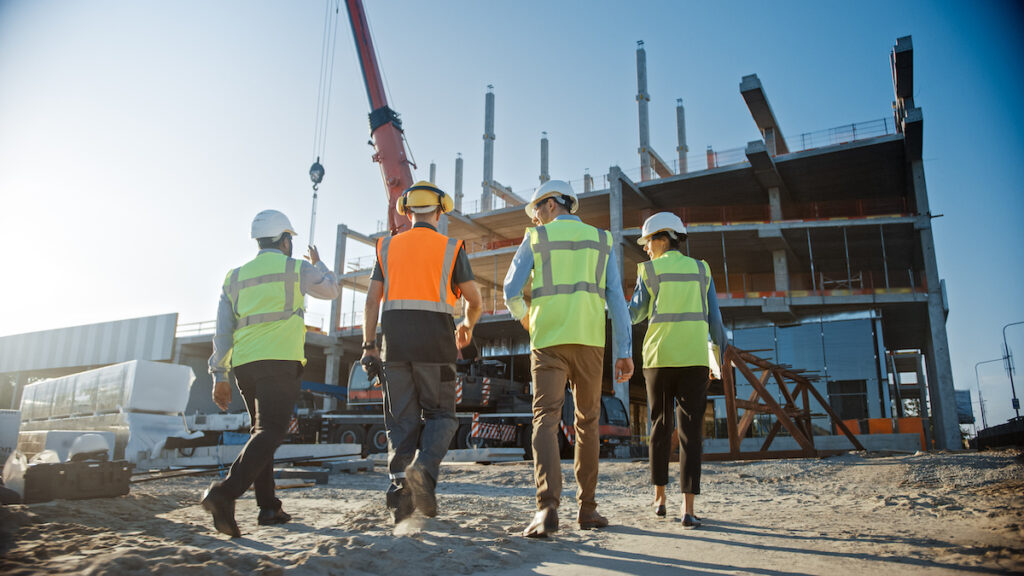
In order to find the best contractor, you must assess their background, recommendations, licenses, and policy details, their interaction methods, and prior job histories, confirming they fit the unique objectives and scope of the undertaking.
Which Kinds of Jobs Do CGTs Usually Manage?
Commercial builders commonly manage a variety of projects, like corporate structures, shopping centers, distribution centers, dining establishments, and industrial sites. They manage construction processes, ensuring adherence to timelines, budgets, and quality standards in multiple fields.
What Effect Does Employing a CGT Have On the Total Expense of My Project?
Employing a CGT might increase initial expenses because of administrative charges. Yet, their skill frequently results in better efficiency, reduced expenses, and less mistakes, resulting in the job being completed more affordably and on schedule.
Will a General Contractor Handle Licensing and Legal Documentation?
A construction manager is key to securing necessary permits and overseeing regulatory compliance (Hickory top rated Commercial General Contractor). Their expertise upholds alignment with area-specific rules, minimizing the chance of pricy holdups and financial penalties, which ultimately simplifies the construction process for the project